
Taking Vitamins Before Bed: Morning vs. Night
Taking vitamins before bed works fine for most of them — there's no general rule against it. A few supplements lean toward one slot over the other for practical reasons (energizing ones suit mornings, wind-down ones suit evenings), but for the majority, the slot you'll actually repeat every night beats a theoretically better one.
Taking vitamins before bed: what actually applies
Nighttime is a genuinely good anchor for a supplement routine, mainly because it's one of the few moments almost everyone has consistently — brushing your teeth, plugging in your phone, turning off the light. That reliability is worth more than most of the biological arguments people make for or against evening dosing. A small number of supplements do have a real reason to lean evening (magnesium's association with winding down) or a real reason to lean morning (some B-vitamins and iron, for people who find them stimulating or want them alongside breakfast), but for the bulk of a typical multivitamin or single-nutrient routine, before bed works as well as any other slot.
Morning vitamins: the case for daytime dosing
Morning has its own practical advantages, separate from any biology. It's the slot most tightly linked to a meal for most people, which matters for fat-soluble vitamins and anything else that benefits from food. It's also usually the more alert, less rushed part of the day for people who aren't naturally morning people at night — decision fatigue by 10pm is real, and a vitamin routine competing with "I just want to go to sleep" is more likely to get skipped than one that happens alongside breakfast.
Which supplements actually suit one slot better
| Time of day | Fits well | Why |
|---|---|---|
| Morning | Fat-soluble vitamins, B-complex, iron (if tolerated) | Easier to pair with breakfast; some people find these energizing |
| Evening | Magnesium, anything in a wind-down routine | Fits naturally alongside other bedtime habits |
| Either | Most multivitamins, vitamin D, zinc, calcium | No meaningful timing advantage either direction |
This table is a starting point, not a rulebook — plenty of people successfully run the opposite of every row in it because that's what their actual day supports.
The real driver: which slot survives your week
The honest answer to "morning or night" isn't really about biology for most supplements — it's about which slot has the least competition from everything else going on in your day. A supplement that has to fight for attention against a rushed morning commute loses to one that rides along with an evening routine that's already calm and predictable, and vice versa for someone whose mornings are the calm part of their day. Pick based on your actual schedule, not based on which article told you mornings were "better."
Making either slot stick
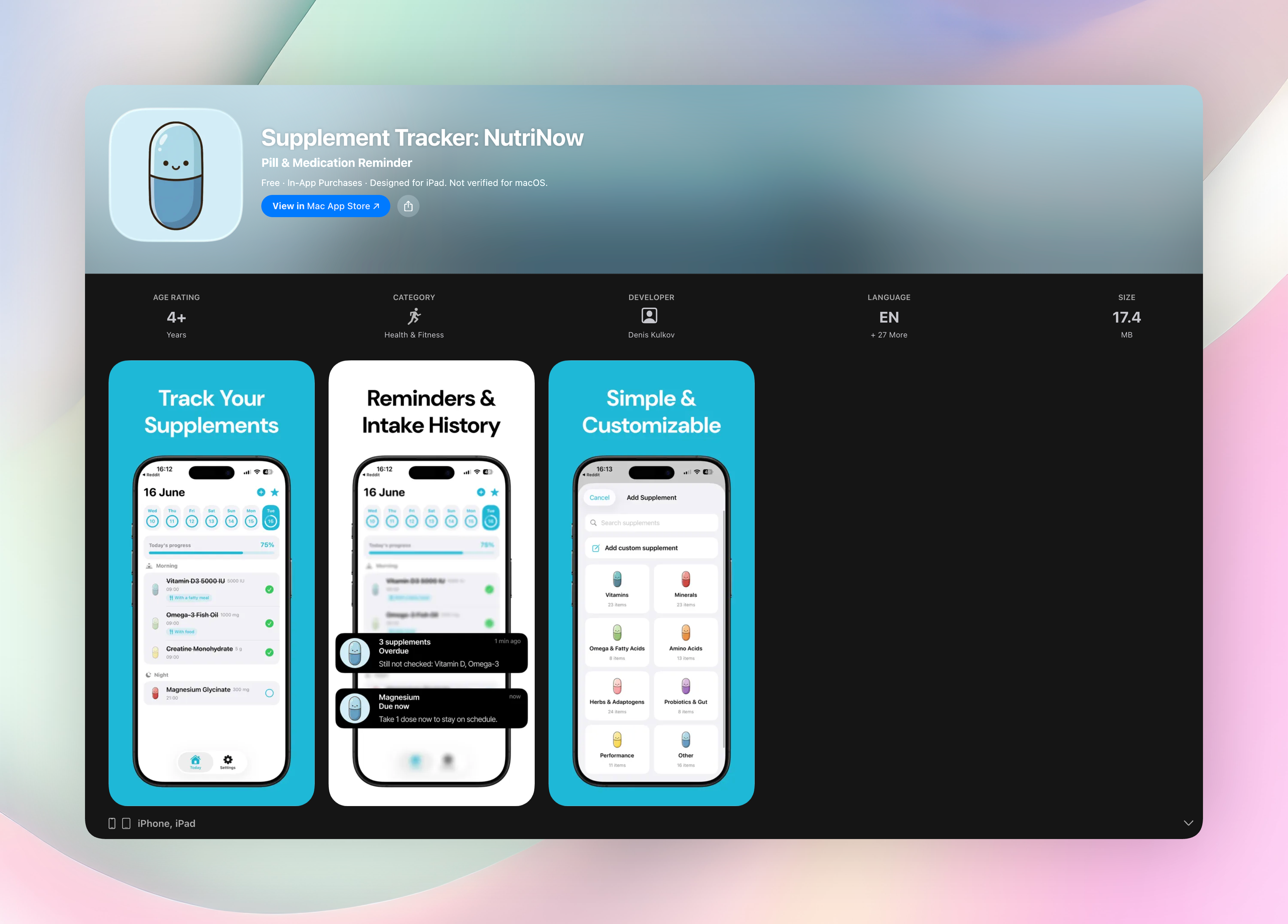
Whichever end of the day you pick, the same habit-building rules apply: anchor to something automatic, keep the bottle visible where that habit happens, and don't treat an occasional missed night or morning as a reason to restart the whole system. If the part that keeps slipping is remembering whether tonight's dose already happened, or which supplements belong in which slot, that's worth solving with a tool rather than memory. Supplement Tracker is a free app for adding your supplements, logging each dose with one tap, seeing a countdown to your next dose, setting reminders, and keeping a full intake history — no account required.
For the deeper dive on magnesium's evening habit specifically, see when to take magnesium, and for the general principle behind picking any slot at all, when is the best time to take vitamins covers the full logic.
FAQ
Is it bad to take vitamins right before bed?
No, for most vitamins there's no downside to taking them right before bed. It's actually one of the more reliable habit anchors, since bedtime routines tend to be consistent night to night.
What vitamins are better taken in the morning?
Fat-soluble vitamins pair naturally with breakfast, and some people find B-vitamins or iron easier to build into a morning routine, especially if they find them stimulating. Beyond those cases, morning doesn't have a broad advantage over evening.
What vitamins are better taken at night?
Magnesium is the most common example, mainly because it fits naturally into an evening wind-down routine rather than because it works better biologically at night. Most other vitamins don't have a strong case for one time over the other.
Can I switch from taking vitamins in the morning to at night?
Yes, switching slots doesn't cause any issue for most supplements. If you're moving a fat-soluble vitamin, just make sure your new slot still has a meal with some fat attached to it.
Free Supplement tools
- Vitamin IU to Mcg ConverterConvert a vitamin label quantity between IU and micrograms. Select the exact vitamin form because IU is a measure of biological activity and its mass conversion is not universal.
- Supplement PlannerTurn the supplement choices you have already made into a simple browser-based timetable. The planner organizes entries; it does not recommend doses or check interactions.