
When to Take Magnesium: Morning or Night
Most people take magnesium in the evening, and it's a reasonable default: it fits naturally into a wind-down routine, and it's easy to remember. Morning works just as well if evenings are chaotic for you. The one real rule is to take it with food if it upsets your stomach.
When to take magnesium: morning or night
There's no absorption-based reason magnesium has to be an evening supplement. The evening habit is popular mostly because magnesium gets associated with winding down and sleep hygiene, so people fold it into a bedtime routine alongside things like dimming lights or putting the phone away. That association makes it an easy habit to keep — "before bed" is a slot almost everyone already has, unlike "10:30am" which competes with a dozen other things.
Morning dosing works identically well if that's the slot you'll actually stick to. The mineral doesn't know what time it is; your calendar does. If you already have a solid morning routine (coffee, breakfast, vitamins) and no reliable evening one, put magnesium there instead of forcing an evening habit that won't hold.
Should you take magnesium with food?
Generally, yes — mainly for comfort, not absorption. Magnesium, especially in higher amounts or certain forms, can cause loose stools or stomach upset when taken on a completely empty stomach. Taking it alongside a meal or at least a small snack tends to smooth that out for most people. If you've never had stomach issues with it, taking it on an empty stomach isn't inherently wrong — it's just the first thing worth changing if you do notice discomfort.
Do different forms of magnesium get absorbed differently?
Yes, and this is common knowledge worth knowing even though it's more about form than timing. Magnesium supplements come in several compounds — glycinate, citrate, oxide, malate, and others — bound to different carrier molecules, and those carriers affect how readily the body absorbs them and how they tend to sit in the digestive system. Citrate and glycinate are generally considered better absorbed than oxide, which is why oxide is the cheaper, more common form in bargain multivitamins. None of this changes the timing advice — with food, consistent slot — but it explains why two "magnesium" bottles can feel different to take even at the same time of day. Your specific product's label and any guidance from your healthcare provider are the right place to weigh which form and amount make sense for you.
Building a magnesium habit that sticks
| Approach | Works well for | Watch out for |
|---|---|---|
| Evening, with dinner | People who already have a wind-down routine | Forgetting on nights you eat late or skip dinner |
| Morning, with breakfast | People with unpredictable evenings | Competing with other morning supplements for attention |
| Split into two smaller doses | People sensitive to stomach upset from one dose | More chances to forget one half |
Whichever slot you land on, the habit-building principle is the same as with any supplement: anchor it to something that already happens daily without a decision attached, and don't treat an occasional missed evening as a reason to abandon the routine.
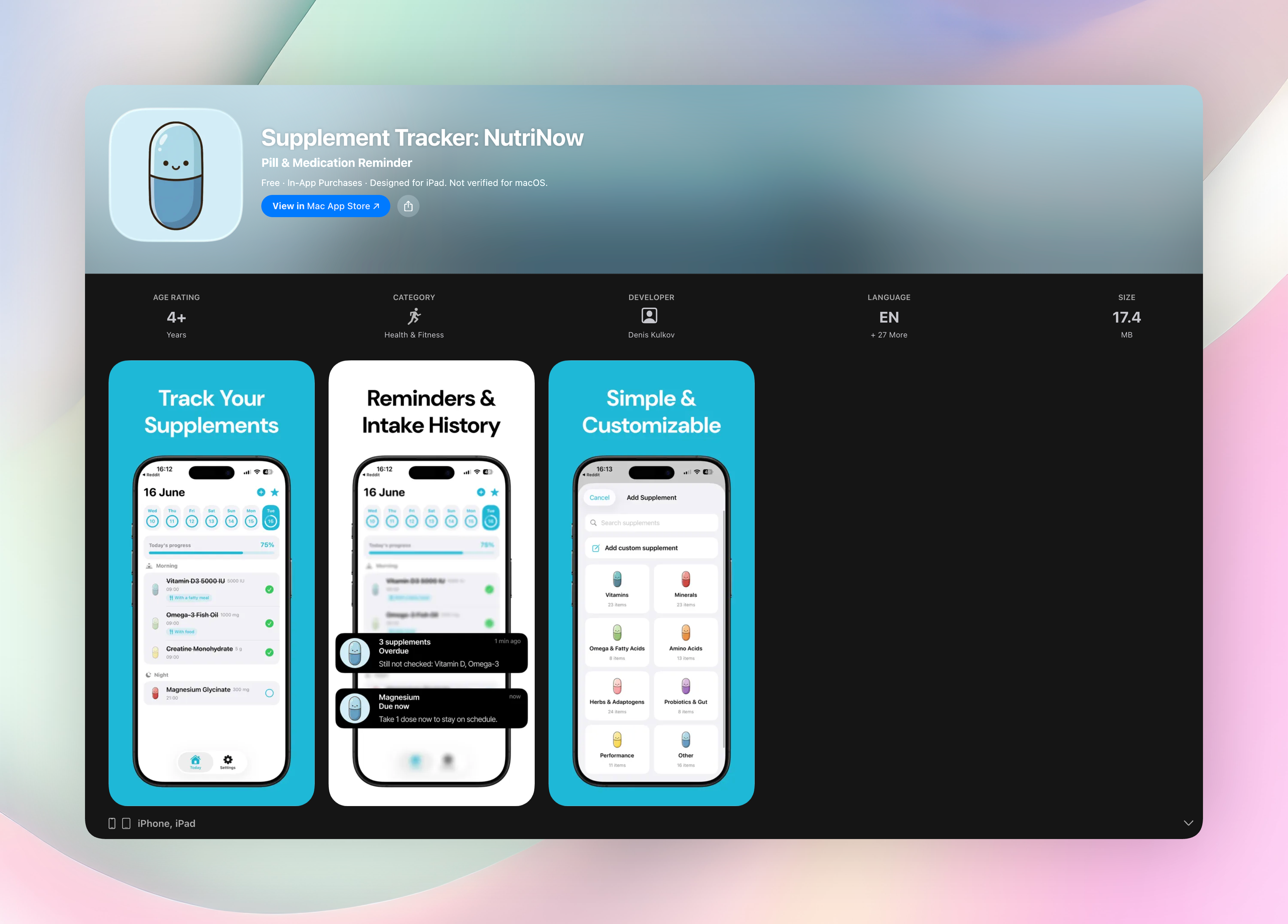
If remembering which slot you're actually on — and whether tonight's dose already happened — is the sticking point, that's worth handling with a tool rather than memory. Supplement Tracker is a free app for adding your supplements, logging each dose with one tap, seeing a countdown to your next dose, setting reminders, and keeping a full intake history — no account required.
For the same consistency-first logic applied across a whole supplement stack, see when is the best time to take vitamins. And if magnesium is one of several things you're timing around a workout, when to take creatine covers the same "daily habit beats precise clock time" idea for that one.
FAQ
Is it better to take magnesium in the morning or at night?
Neither is inherently better for absorption. Evening is the more common choice because it fits naturally into a wind-down routine and is easy to remember, but morning works just as well if that's the slot you'll actually keep.
Does magnesium keep you awake or make you sleepy?
Many people associate magnesium with relaxation and take it as part of a bedtime routine, but individual responses vary and it isn't a sedative. If you're unsure how it affects you, try it earlier in the day first and see how you respond.
Should magnesium be taken with or without food?
With food is the safer default, mainly to reduce the chance of stomach upset or loose stools that some people get from taking it on an empty stomach. It isn't a strict requirement if your stomach tolerates it fine either way.
Does the type of magnesium change when I should take it?
Not really — the timing advice (consistent slot, with food if it upsets your stomach) applies across glycinate, citrate, oxide, and other forms. The form mainly affects absorption and digestive tolerance, which is a question for the product label rather than the clock.
Free Supplement tools
- Vitamin IU to Mcg ConverterConvert a vitamin label quantity between IU and micrograms. Select the exact vitamin form because IU is a measure of biological activity and its mass conversion is not universal.
- Supplement PlannerTurn the supplement choices you have already made into a simple browser-based timetable. The planner organizes entries; it does not recommend doses or check interactions.