
How to Travel With Supplements Without Losing Track
Pack supplements in their original labeled containers, keep them in a carry-on rather than checked baggage, and avoid leaving them somewhere hot — a car trunk, a sunny windowsill, checked cargo hold. Heat and humidity degrade potency over time, and original labels make customs and TSA checks simpler.
How to travel with supplements without losing your routine
Travel breaks more supplement habits than anything else, mostly because the anchors that make a routine automatic at home — a specific coffee maker, a specific bathroom counter — don't exist on the road. The fix isn't a complicated system, it's packing deliberately and picking a new, temporary anchor for the trip rather than hoping the old one somehow travels with you.
Packing: original containers vs. travel organizers
Keeping supplements in their original labeled bottles is the safer default, especially for international travel, since customs officials and TSA agents can identify what something is at a glance without asking. For a short domestic trip, a travel-sized weekly organizer is more practical — nobody wants to pack six full bottles for a three-day trip — but it's worth keeping at least the outer packaging or a photo of the label for anything you'd need to explain or replace.
A few practical packing habits:
- TSA-friendly organizers — small, clear travel cases pass through security screening without issue; loose pills in a plastic bag are more likely to draw a second look.
- Carry-on, not checked. Checked baggage spends time in temperature extremes you can't control — a hot tarmac before loading, a cold ramp after landing — and a delayed or lost bag means losing your supplements along with your clothes.
- Pack a couple of extra days' worth, in case a trip runs long or a flight gets delayed.
Does heat ruin vitamins?
Extended heat exposure does degrade supplement potency over time — this is well-established general storage knowledge, not specific to any one product. A hot car trunk, a sunny windowsill, or a checked bag sitting on a tarmac in summer are all worse storage environments than a normal room-temperature bag or carry-on. A few hours of heat during a single travel day generally isn't enough to ruin a supplement outright, but repeated heat exposure across a trip — or storing supplements in a hot car all vacation — will degrade them faster than normal shelf life would suggest. When in doubt, keep them wherever you're keeping anything else you wouldn't want overheated.
Staying on schedule across time zones
Time zone changes are less complicated for supplement timing than they sound, mostly because most supplements care about "roughly once a day, with reasonable consistency" rather than a precise hour. For short trips (a few time zones, under a week), the simplest approach is to keep taking your supplements based on your anchor habit in local time — with breakfast, before bed — rather than trying to track your original time zone's clock. Your body adjusts to the local routine within a day or two anyway, and chasing the "correct" original hour across a shifting schedule usually creates more missed doses than it prevents.
For longer trips or bigger time changes, don't stress about a day or two of irregular timing during the adjustment period itself — resume your normal anchor-based routine once your daily schedule settles into the new time zone.
Keeping track on the road
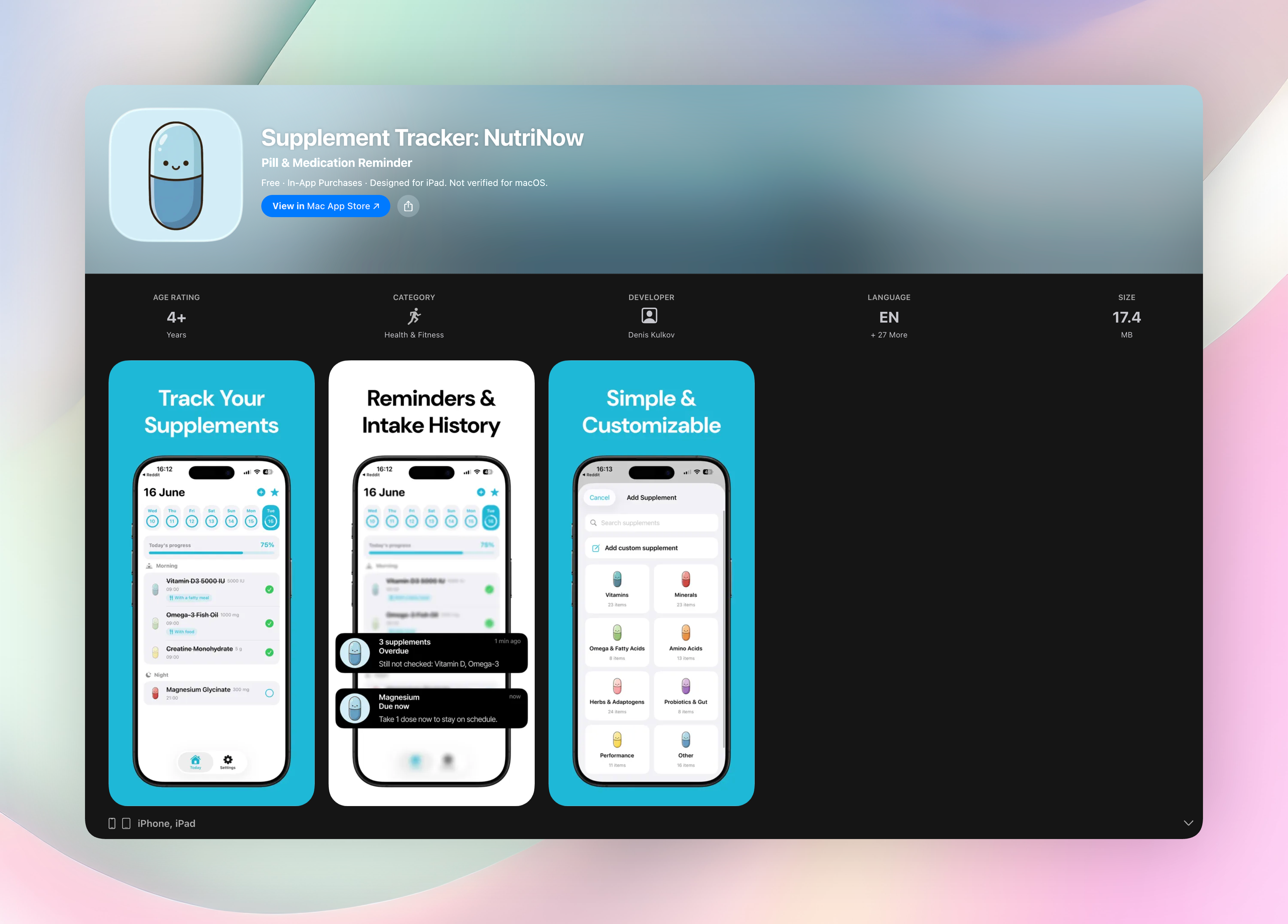
The biggest practical risk while traveling isn't the science, it's simply losing track — not knowing if you already took today's dose in an unfamiliar place, or realizing three days in that you forgot to pack something. A digital log travels better than memory does, especially across time zones where "today" gets confusing. Supplement Tracker is a free app for adding your supplements, logging each dose with one tap, seeing a countdown to your next dose, setting reminders, and keeping a full intake history — no account required, which is useful specifically because it doesn't depend on a routine or a pill organizer that made sense at home but doesn't travel with you.
If you normally rely on a weekly organizer at home, the pill organizer guide covers travel-sized versions of the same system, and when is the best time to take vitamins has more on why a rough daily habit beats chasing a precise hour, on the road or off it.
FAQ
Should I pack supplements in my carry-on or checked bag?
Carry-on. Checked baggage spends time in temperature extremes you can't control before and after the flight — a hot tarmac, a cold ramp — and a delayed or lost checked bag means losing your supplements along with everything else in it.
Does heat ruin vitamins during travel?
Extended heat exposure can degrade potency over time, so it's worth avoiding hot car trunks, sunny windowsills, and checked cargo holds. A few hours of moderate warmth during a single travel day generally isn't enough to ruin a supplement outright.
How do I take supplements on schedule across time zones?
For most trips, switch to your usual anchor habit (with breakfast, before bed) in local time rather than tracking your original time zone's clock. Most supplements care more about rough daily consistency than a precise hour.
Do I need to keep supplements in their original containers when traveling?
It's the safer choice, especially for international travel, since customs and security can identify labeled containers at a glance. For short domestic trips, a labeled travel organizer works fine as long as you keep track of what's in it.
Free Supplement tools
- Vitamin IU to Mcg ConverterConvert a vitamin label quantity between IU and micrograms. Select the exact vitamin form because IU is a measure of biological activity and its mass conversion is not universal.
- Supplement PlannerTurn the supplement choices you have already made into a simple browser-based timetable. The planner organizes entries; it does not recommend doses or check interactions.