
When to Take Probiotics: Before or After Food
There's genuine disagreement here: some probiotic strains are recommended on an empty stomach, others alongside food, and it depends on the specific product. Check your label first. Absent other instructions, taking probiotics first thing in the morning, roughly 30 minutes before eating, is the easiest habit to keep consistent.
When to take probiotics: empty stomach or with food
This is one of the few supplement-timing questions where the internet's disagreement is real, not manufactured. Some probiotic formulations are designed to survive stomach acid best when taken on an empty stomach, on the theory that less digestive activity gives the live cultures an easier path through. Other formulations — particularly ones with protective coatings or delayed-release capsules — are built to be taken with a meal, using the food itself to buffer stomach acid on the way through. Neither approach is universally correct, because it depends on the strain, the delivery format, and how the manufacturer designed the product to survive.
This is a case where the label genuinely outranks general advice. If your product says "take with food" or "take on an empty stomach," that instruction reflects how that specific formulation was tested and built, and it's worth following over a generic rule you read somewhere else.
If your label doesn't specify
Plenty of probiotic products don't give explicit timing instructions beyond "once daily." In that situation, a common default is taking it first thing in the morning, roughly 20 to 30 minutes before breakfast — early enough that the stomach is relatively empty, but close enough to a meal that you're not leaving a multi-hour gap. This isn't a rule with strong backing so much as a practical compromise that covers both schools of thought reasonably well without requiring you to research your specific strain.
Morning or night for probiotics
Morning tends to win by default, mostly because of how the empty-stomach question plays out during the day — most people's longest natural gap without food is overnight, right before breakfast. Taking a probiotic then, before the first meal, approximates "empty stomach" without any extra planning. Taking it at night works too, particularly if your evenings have a longer gap between dinner and bed than your mornings do between waking and breakfast. As with most supplement timing, the version that survives your actual routine beats the theoretically ideal one you won't stick to.
Building a consistent probiotic habit
Probiotics are more sensitive to inconsistency than some supplements, since a lot of the reasoning behind timing (stomach acid levels, gaps between food) depends on doing it the same way each day rather than randomly. A few things that help:
- Pick one relationship to food and repeat it — "before breakfast" or "with dinner," not a different pattern each day.
- Store it where the temperature stays stable, since some probiotic products are refrigerated and heat-sensitive; check the label for storage instructions specifically.
- Don't double up if you miss a day. Just resume the normal single dose at your usual time.
- Keep it separate from anything that might interfere, like taking it right alongside a very hot drink, if your label calls that out — otherwise this isn't something to overthink.
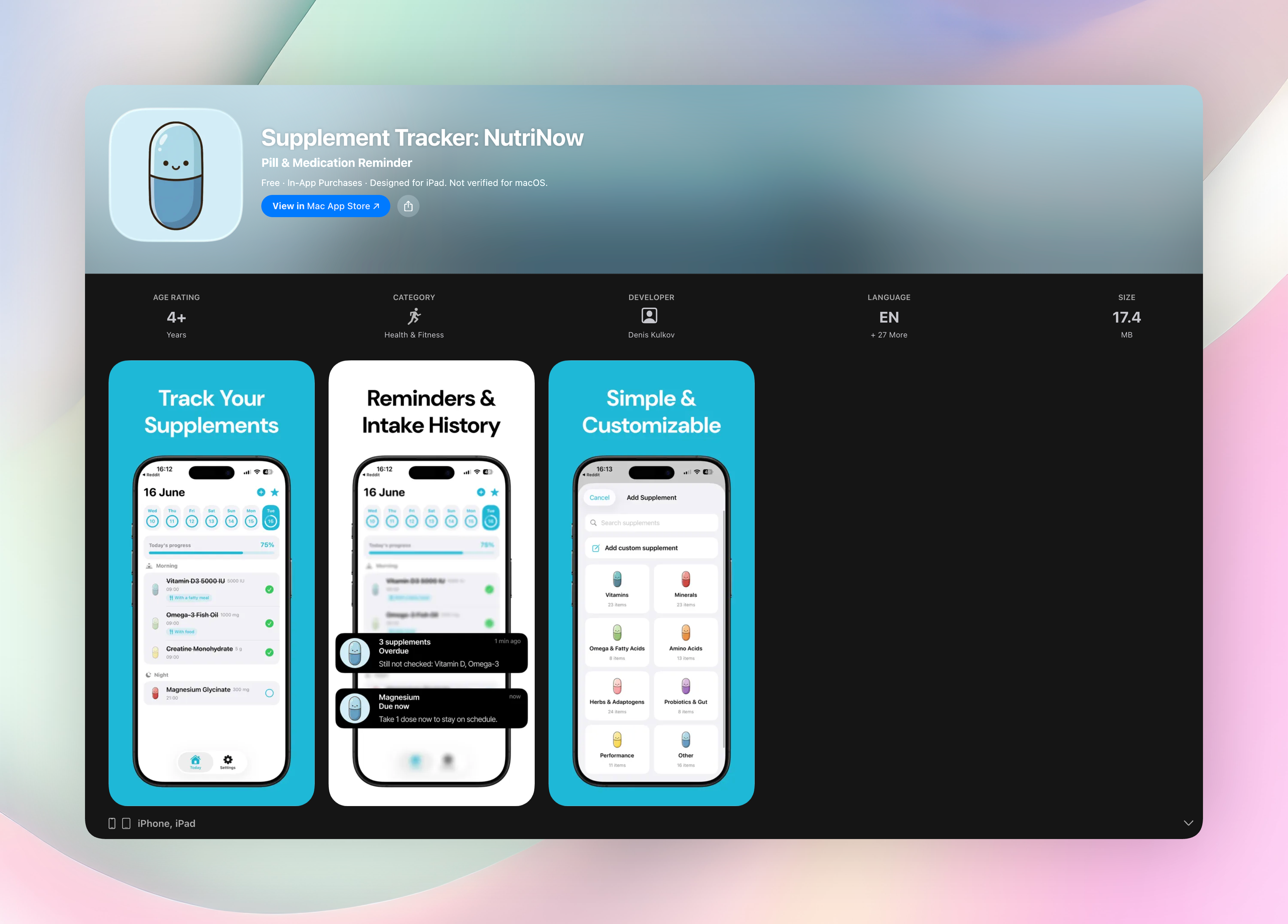
If the habit that keeps slipping is remembering whether you already took today's dose before you ate — which matters more here than with most supplements — a quick log beats trying to recall it. Supplement Tracker is a free app for adding your supplements, logging each dose with one tap, seeing a countdown to your next dose, setting reminders, and keeping a full intake history — no account required.
For the broader "same time daily beats a perfect time" principle that applies across your whole stack, see when is the best time to take vitamins.
FAQ
Should probiotics be taken before or after eating?
It genuinely depends on the specific product — some strains and formulations are meant for an empty stomach, others for alongside food. Check your label first; absent instructions, taking it 20–30 minutes before breakfast is a reasonable default.
Is morning or night better for probiotics?
Morning is the more common choice because it lines up with the natural overnight gap without food, approximating an empty stomach with no extra planning. Night works too if your evening gap between dinner and bed is longer than your morning gap.
What happens if I take my probiotic at a different time each day?
It's not harmful, but a consistent relationship to food (always before breakfast, or always with dinner) makes the empty-stomach or with-food reasoning behind your specific product actually apply. Random timing undercuts whatever logic your label is built around.
Do probiotics need to be refrigerated?
Some do, some don't — it depends on the specific strains and how the product is formulated. Check your label's storage instructions rather than assuming either way, since heat and humidity can affect live cultures in refrigerated products.
Free Supplement tools
- Vitamin IU to Mcg ConverterConvert a vitamin label quantity between IU and micrograms. Select the exact vitamin form because IU is a measure of biological activity and its mass conversion is not universal.
- Supplement PlannerTurn the supplement choices you have already made into a simple browser-based timetable. The planner organizes entries; it does not recommend doses or check interactions.