
Best 8 Bearable Alternatives in 2026: Apps That Make Tracking Tolerable
Introduction
Supplement Tracker is our top pick for anyone looking for bearable alternatives that focus on supplement consistency. Below, seven other health-tracking apps cover the gaps Bearable leaves open, from mood logging to full medical sync, so you can find the right fit without guesswork.
Quick comparison table
| App | Best for | Platform | Standout |
|---|---|---|---|
| Supplement Tracker | Simple supplement schedules | iOS | One-tap reminders that stay out of your way |
| Daylio Journal | Mood tracking without typing | iOS, Android | Auto-generated correlation charts from emoji-style logs |
| Guava | Aggregating medical records | iOS, Android | Auto-pulls lab results from patient portals |
| CareClinic | Chronic-condition management | iOS, Android | Shareable care reports built from symptom-medication loops |
| Flaredown | Mapping flares to triggers | iOS, Android | Visual timeline connecting diet, weather, and stress to symptoms |
| Symple | Minimalist symptom tracking | iOS | One-tap photo logs and instant PDF exports |
| eMoods | Privacy-first mood charting | iOS, Android | No-account setup with printable bipolar tracking charts |
| Effecto | Connecting habits to well-being | iOS, Android | Insight cards that show clear cause-effect patterns |
The 8 best bearable alternatives
All eight picks tackle tracking gaps Bearable users commonly mention. The mix covers symptom patterns, mood, meds, and supplements, and none of them require a computer-science degree to set up.
1. Supplement Tracker
Best for: Simple supplement schedules with reminders that don’t nag you
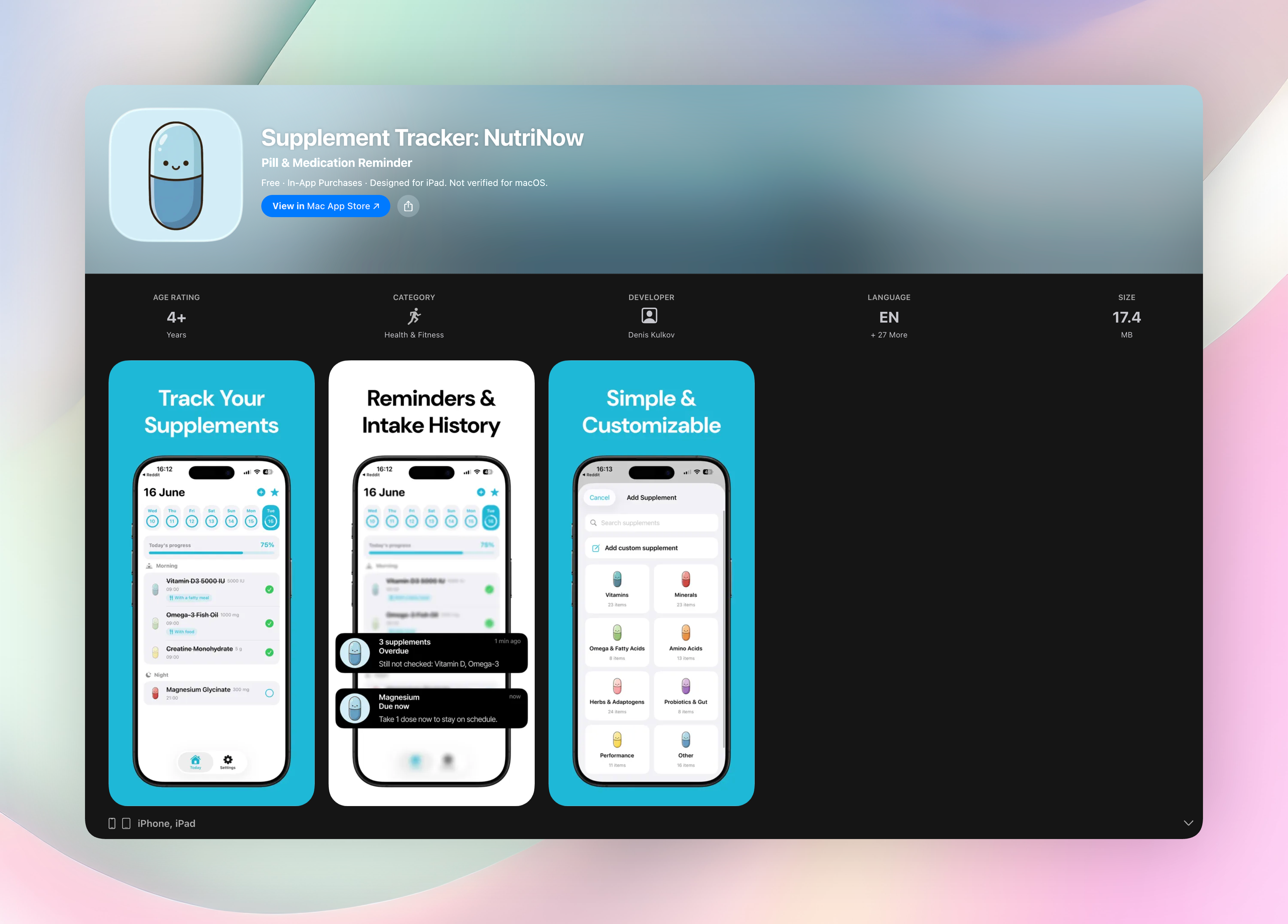
This is the only app built solely for supplement consistency. No symptom diaries, no mood check-ins, just a clean way to mark a dose and stay on track. The screen is uncluttered, with no long forms and no notification fatigue.
Set up a supplement once and a countdown timer shows exactly when your next dose is due. If you miss one, you can log it in two taps without starting a diary entry. You can also pause tracking or auto-finish a bottle after a set number of intakes, which is handy when you cycle off a supplement.
- Add multiple supplements with custom names and mascots so you recognize them instantly
- One-tap logging: tap the check mark, done
- Countdown timer displays your next dose window clearly
- Gentle push notifications remind you, no need to hunt through the app
- Full intake history at a glance, including dose and notes
- Optional auto-finish after a set number of doses to prevent running out
It’s iOS-only and worth grabbing first because it fixes the one habit most health stackers drop: taking the right pills at the right time.
Get Supplement Tracker
Supplement Tracker on the App Store
2. Daylio Journal
Best for: People who hate typing but want rich mood data
Tap a mood face, pick a few activity icons (work, exercise, friends), and skip the keyboard entirely. Over time, the app builds correlation charts automatically, showing which activities lift your mood and which bring it down. The icons are fully customizable, so you can track exactly what matters to you. Exportable PDF summaries make therapy visits more concrete, and the streak counter keeps the habit sticky.
3. Guava: Health & Med Tracker
Best for: Serious health-data aggregation in one feed
Guava grabs lab results and visit summaries from your patient portals, then blends them with manual logs for symptoms, medications, water intake, and sleep. A medication scanner speeds up entry, and everything lands in a single timeline. If you’re juggling multiple providers, this app turns scattered records into a searchable health record without manual data entry marathons.
4. CareClinic: Tracker, Reminder
Best for: Managing chronic conditions with detailed reporting
CareClinic connects your symptoms, meds, and mood into a daily loop, with built-in reminders for every task. The shareable care reports mean you walk into a doctor’s office with facts, not foggy memories. You can track specific triggers, note side effects, and adjust routines based on patterns the app surfaces. It’s designed for people who need their day structured around a treatment plan, not just a mood check-in.
5. Flaredown for Chronic Illness
Best for: Mapping flare-ups to real-world triggers
Flaredown asks you to log symptoms alongside treatments, diet, weather, and stress each day. Then it generates a visual timeline that makes patterns obvious, like a migraine that consistently follows a specific meal. The interface keeps things simple so you’re not stuck filling out lengthy surveys when you feel awful. It’s especially useful for conditions where food and environment play a big role.
6. Symple Symptom Tracker
Best for: No-frills tracking of up to five key symptoms
Symple gives you a clean daily check-in that takes under 30 seconds. You can snap photos of physical changes (rashes, swelling) directly inside the log and tag factors like sleep or exercise to spot connections. The one-tap PDF export is designed to hand straight to a physician, with no extra formatting needed. It’s bare-bones by design, so there’s nothing to distract you from logging the symptoms that matter most.
7. eMoods Bipolar Mood Tracker
Best for: Privacy-first tracking for bipolar, depression, and anxiety
eMoods keeps things local: you log daily highs, lows, sleep, and medications, and the app builds printable charts without requiring an account or sharing data. The simple scale (mild to severe) and yes/no psychosis toggle work well for people who need quick, consistent entries. You can export reports on your own terms, but everything stays on your device by default, a refreshing stance in a category full of cloud sync.
8. Effecto: Health & Habit Tracker
Best for: Connecting daily actions to well-being scores
Log mood, symptoms, and habits in a few taps, and Effecto serves up insight cards that show, for example, how your energy changes on days you meditate versus days you skip it. Customizable reminders keep you on track long enough to see clear cause-effect patterns. It’s the best all-rounder if you want a single app to watch how sleep, movement, and stress stack up against how you actually feel.
How we picked these apps
We looked for clean onboarding, reliable reminders, useful data visualizations, and basics that aren’t locked behind a paywall before you even get started. Each app had to plug a specific gap Bearable users complain about: med logs, lab sync, supplement schedules, or fasting-mood correlation. The picks span iOS and Android so the list works no matter what phone you carry. Every free tier was tested for at least a week to confirm it delivers real value without asking for a credit card upfront.
Frequently asked questions
Are these apps free?
Supplement Tracker is free to download and use with no hidden costs. Most others offer solid free tiers. Daylio, Guava, CareClinic, and Effecto lock advanced charts behind a subscription, but the core logging remains free.
Can I use these alongside Bearable?
Yes. A lightweight combo works well: use Supplement Tracker for pill reminders and add one symptom or mood tracker without creating double-entry headaches. If you’re tracking ADHD meds, Supplement Tracker paired with CareClinic gives you time-based reminders plus detailed medication logs without app-crossover confusion.
Do any export data to my doctor?
Symple, eMoods, and CareClinic all offer one-tap PDF reports designed to hand to a physician. Symple even lets you attach symptom photos. eMoods keeps the export offline-first, and CareClinic generates full care summaries that fit a clinical visit.
The verdict
Supplement Tracker is the top pick for simple, impossible-to-ignore supplement reminders. It’s the best starting point before you add a broader health tracker, and it takes under a minute to set up. Get Supplement Tracker — available for iOS now.
Free Supplement tools
- Vitamin IU to Mcg ConverterConvert a vitamin label quantity between IU and micrograms. Select the exact vitamin form because IU is a measure of biological activity and its mass conversion is not universal.
- Supplement PlannerTurn the supplement choices you have already made into a simple browser-based timetable. The planner organizes entries; it does not recommend doses or check interactions.