When to Take Vitamin D: Morning, Night, or With Food
Take vitamin D with a meal that has some fat in it — that's the whole rule, and it applies whether the meal is at 7am or 7pm. Vitamin D is fat-soluble, so it needs dietary fat present to absorb well; the time of day itself doesn't matter nearly as much as pairing it with food.
When to take vitamin D: the food part matters, the clock part doesn't
Vitamin D belongs to the fat-soluble group, alongside vitamins A, E, and K, which means it dissolves into fat during digestion rather than water. Taking it on a completely bare stomach — no food at all — doesn't make it useless, but it does make absorption noticeably less efficient than taking it alongside eggs, avocado, nut butter, dairy, olive oil, or basically any meal that isn't fat-free. This is the one piece of vitamin D timing advice that's actually well established; almost everything else about "best time" is preference.
Morning versus evening is a genuine wash for vitamin D specifically. Unlike caffeine or some B-vitamins, it doesn't have an energizing effect that would make it a bad evening choice, and it doesn't have a sedative effect that would make it a bad morning choice. Pick whichever meal in your day is most reliable — for a lot of people that's breakfast, simply because it's the meal least likely to get skipped or delayed.
Vitamin D and magnesium: why they're often paired
You'll frequently see vitamin D and magnesium recommended together, and the practical reason is scheduling convenience rather than a required interaction: if you're already taking magnesium in the evening as part of a wind-down routine, adding vitamin D to that same moment (with a small evening snack that has some fat) means one habit covers both instead of two. Some people prefer pairing vitamin D with a fattier breakfast instead and keeping magnesium separate at night — both are fine. Treat the pairing as a convenience, not a rule you're breaking if you keep them apart.
Does the amount of fat in the meal matter?
Not precisely — you don't need to calculate grams. A splash of milk in coffee, a spoon of peanut butter, or eggs at breakfast are all enough dietary fat to help. The practical takeaway is simply "don't take it on a totally empty stomach with just water" rather than any specific fat threshold. If your only truly reliable moment in the day happens to be food-free, taking it there is still far better than not taking it at all — consistency outranks optimizing the fat pairing.
Keeping a vitamin D habit consistent
Vitamin D is a supplement people tend to be inconsistent with precisely because it doesn't produce a noticeable day-to-day feeling the way, say, caffeine does. Nothing nudges you to remember it. That makes it one of the better candidates for a habit anchor and a reminder rather than relying on memory:
- Anchor it to a specific meal, not a time of day, since the food-pairing is the part that actually matters.
- Keep the bottle next to that meal's usual spot — the breakfast table, the coffee station, wherever the anchor meal actually happens.
- Set a reminder if the anchor meal itself is irregular. Skipped breakfasts are common; a nudge covers the gap.
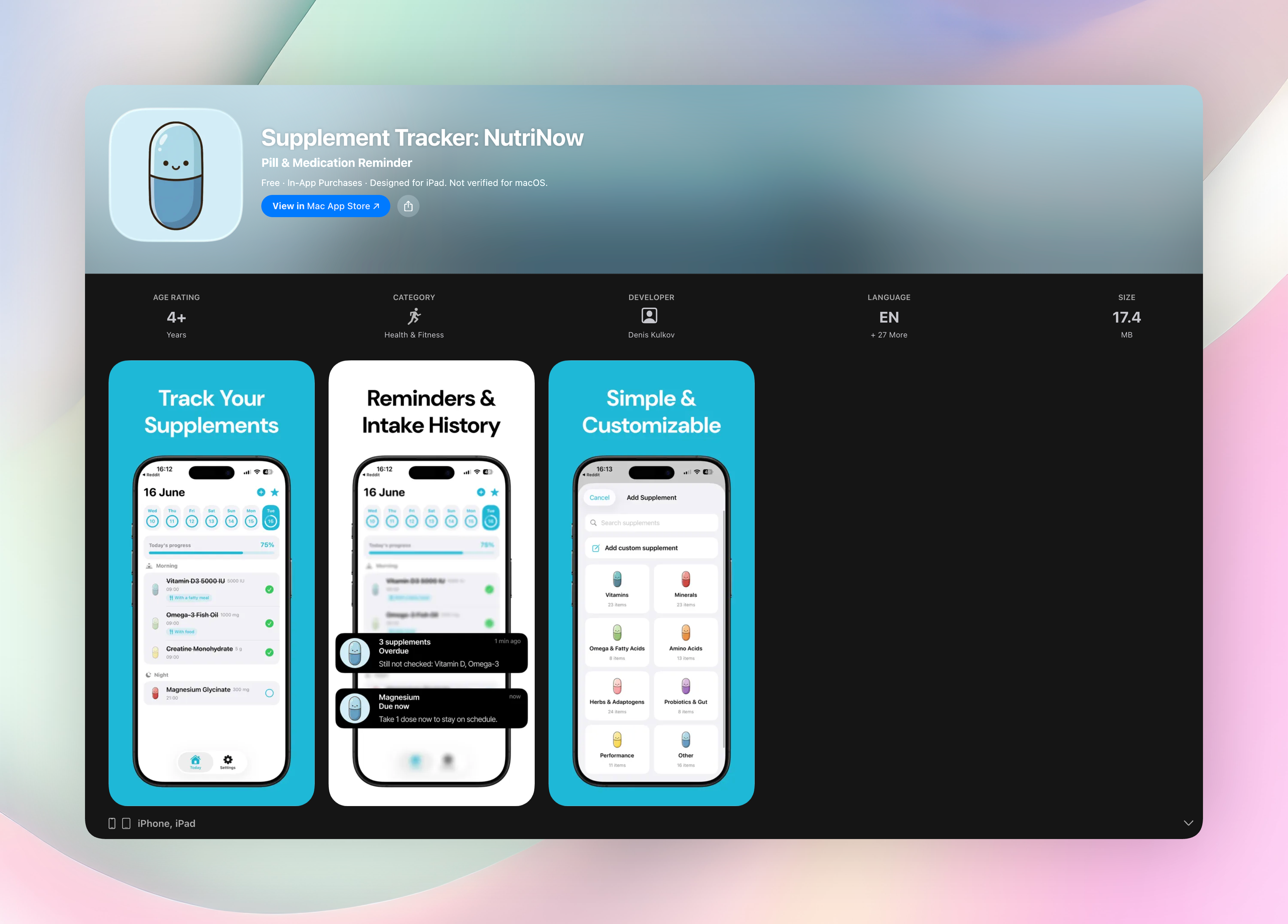
That's a natural fit for a dedicated tracker rather than trying to remember by feel, since vitamin D gives you no signal either way. Supplement Tracker is a free app for adding your supplements, logging each dose with one tap, seeing a countdown to your next dose, setting reminders, and keeping a full intake history — no account required.
For the same food-pairing logic applied to the rest of the fat-soluble group, when is the best time to take vitamins covers vitamins A, E, and K alongside D. If magnesium is already part of your evening routine, when to take magnesium has the details on pairing the two.
FAQ
Should I take vitamin D in the morning or at night?
Either works — vitamin D doesn't have a stimulating or sedating effect that favors one time over the other. What actually matters is taking it with a meal that contains some fat, so pick whichever meal in your day is most reliable.
Can I take vitamin D on an empty stomach?
You can, but absorption is noticeably better with some dietary fat present, since vitamin D is fat-soluble. If your only consistent moment is food-free, taking it there beats skipping it, but pairing it with a meal when possible is the better default.
Should vitamin D and magnesium be taken together?
They're often taken together for scheduling convenience — usually in the evening if that's when your magnesium routine already happens — rather than because they need to be combined. Taking them at separate times of day works just as well.
How much fat do I need in the meal for vitamin D to absorb well?
There's no specific gram threshold to hit. A normal meal with some fat in it — eggs, dairy, nut butter, oils — is enough; you don't need to engineer the pairing beyond avoiding a completely fat-free, food-free moment.
Free Supplement tools
- Vitamin IU to Mcg ConverterConvert a vitamin label quantity between IU and micrograms. Select the exact vitamin form because IU is a measure of biological activity and its mass conversion is not universal.
- Supplement PlannerTurn the supplement choices you have already made into a simple browser-based timetable. The planner organizes entries; it does not recommend doses or check interactions.